
Research · 07.09.2026 · 8 хв · True Fungi
Fungi are closer to humans than to plants: what that means for us
Fungi and animals share a common ancestor, and plants split off earlier. Here is what a fungal cell has in common with ours and why that kinship matters for functional mushrooms.
For a long time mushrooms were filed under "odd plants": they grow out of the ground, they do not move, they have no eyes. Molecular biology overturned that picture. By genetic evidence, fungi are closer to animals, and therefore to us, than they are to plants. This article explains where that comes from, what exactly we share, and why the kinship matters if you take functional mushrooms.
Коротко про головне
Fungi and animals descend from a common ancestor that lived roughly a billion years ago, and both branches split from plants earlier still. That is why many fungal molecules are "familiar" to the human body: it carries receptors for fungal beta-glucans, and the sterols and energy stores in a fungal cell are built on the same plan as ours. The kinship explains why mushroom compounds interact with the body; it does not guarantee a benefit, which is tested separately for each species.
One tree, three kingdoms
As long as biologists classified life by appearance, fungi landed next to plants: immobile, walled cells, something that looks like fruit. Once gene sequences could be compared, the tree of life was redrawn. Fungi and animals formed a shared branch, named Opisthokonta, while plants stayed on a separate one. Molecular phylogenetics places the common ancestor of fungi and animals at about a billion years ago, and our split from the plant lineage earlier than that.
Put simply, a mushroom is not a strange plant but a distant relative of animals that chose a different way to live: instead of swallowing food, it releases enzymes into its surroundings and absorbs what dissolves. That lifestyle shaped its appearance, and the appearance misled us for centuries.
What we share at the level of the cell
The kinship shows not only in genes but in how the cell works.
- How we eat. Neither fungi nor animals can photosynthesise. Both kingdoms live on ready-made organic matter, and their metabolism is built around that.
- Energy storage. Plants store starch; fungi and animals store glycogen, the same molecule kept in our muscles and liver.
- Chitin. The fungal cell wall is made of chitin, the polymer that builds the shells of insects and crustaceans. Plant walls are cellulose.
- Membrane sterols. Our cell membranes rely on cholesterol; fungal membranes rely on ergosterol. The two are close in structure and do the same job: keep the membrane flexible and functional.
- Vitamin D. Under ultraviolet light, the ergosterol in a mushroom turns into vitamin D2, much as a cholesterol precursor in our skin turns into vitamin D3. A mushroom in the sun "tans" by almost the same script we do.
The similarity runs so deep that it complicates pharmacology: medicines against fungal infections are harder to design than antibiotics, because what hits a fungal cell often touches a human one too. It is one more proof of kinship, if from an inconvenient angle.
Why it matters for functional mushrooms
Kinship on its own does not make a mushroom beneficial. What it explains is something else: why the body "sees" fungal molecules at all and responds to them. Our immune system has coexisted with fungi for millions of years and carries dedicated receptors that recognise the beta-glucans of the fungal cell wall. According to research, these receptors are the route by which mushroom polysaccharides interact with immune cells, which is why beta-glucan content is the key quantitative measure of a mushroom extract. At True Fungi it is verified in the lab for every batch, and the reports are open on the quality control page.
The same goes for smaller molecules: the triterpenes of Reishi or the erinacines of Lion's Mane act on the same families of proteins and signalling pathways that animal cells use. Chemically, we are not strangers to each other, and that is exactly what makes mushrooms an interesting subject for the science of everyday well-being.
Kinship explains why a mushroom "talks" to the body. What it says is checked separately for each species.
Five mushrooms and what they are valued for
Each of the mushrooms we grow and extract has been studied on its own, and each carries its own set of compounds. Here is a short map.
True Fungi mushrooms and their key compounds
| Mushroom | Key compounds | Chosen for |
|---|---|---|
| Lion's Mane | erinacines, hericenones, beta-glucans | focus, memory |
| Reishi | triterpenes (ganoderic acids), beta-glucans | calm, sleep |
| Cordyceps | cordycepin, adenosine, beta-glucans | recovery, endurance |
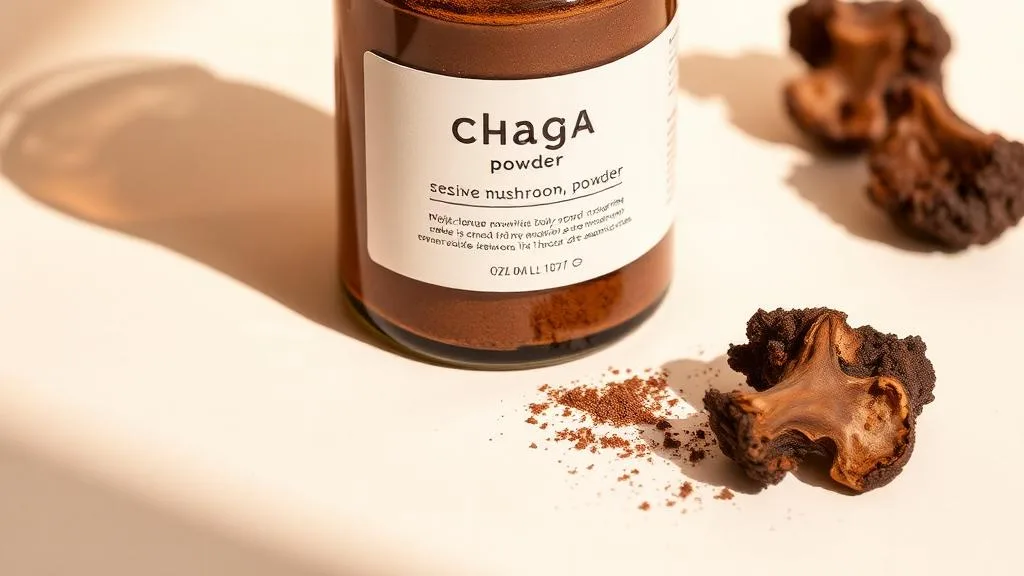
| Chaga | melanins, betulinic acid, beta-glucans | immunity, antioxidant support |
| Turkey Tail | polysaccharopeptides PSK and PSP | immunity |
With all five the effect builds cumulatively: the first signal usually shows after 10–14 days of daily intake, and a steady effect forms after 6–8 weeks of a course. That is why we sell courses of 1, 2 or 3 months rather than single jars, and match the mushroom to a goal rather than a diagnosis. You can pick your goal on the choose by goal page.
What the kinship does not mean
Honesty matters more than a good story here, so a word on the limits.
- Similar is not the same as safe. Some fungi are deadly poisonous, and their kinship with us changes nothing. Functional mushrooms were selected by centuries of use and modern research, not by the fact of relatedness.
- A mushroom does not replace treatment. Functional mushrooms are not a medicine. They support; they do not cure. If you have a chronic condition or take medication, consult a doctor before starting a course.
- The raw material matters. Mycelium and fruiting bodies share the same genes, but their beta-glucan content differs. We use a 10:1 fruiting-body extract with a verified beta-glucan content of at least 30%.
Frequently asked questions
Are fungi really closer to humans than to plants?
Yes. By molecular evidence, fungi and animals form one branch of the tree of life, Opisthokonta, and plants split off from it earlier.
How much DNA do we share with fungi, in percent?
The exact figure depends on what is compared and how, so any single percentage is a simplification. What matters more is that the basic cell machinery, metabolism and membrane structure in humans and fungi follow a shared plan.
If fungi are so similar to us, why are they beneficial?
Kinship explains why the body recognises fungal molecules and responds to them. The benefit of each species is supported by its own studies, not by relatedness itself.
Does this mean any mushroom is safe?
No. Some fungi are poisonous. Functional mushrooms are chosen for their long record of use and for research, and the quality of an extract is verified in a lab.
Головне
- Fungi and animals share a common ancestor, and both branches split from plants earlier.
- Fungal and human cells follow shared principles: glycogen, membrane sterols, vitamin D synthesis, chitin as in insects.
- The immune system carries receptors for fungal beta-glucans, which is why their content is the key measure of an extract.
- Kinship explains the interaction but does not guarantee a benefit: each mushroom is tested on its own and matched to a goal.
- The effect is cumulative: a first signal in 10–14 days, a steady effect after 6–8 weeks of a course.
Готові спробувати?
Курс на 2 або 3 місяці — вигідніше: знижка вже врахована в ціні.